
Insights into Challenges, Strategies and Opportunities for Addressing Climate Finance Needs in Uganda
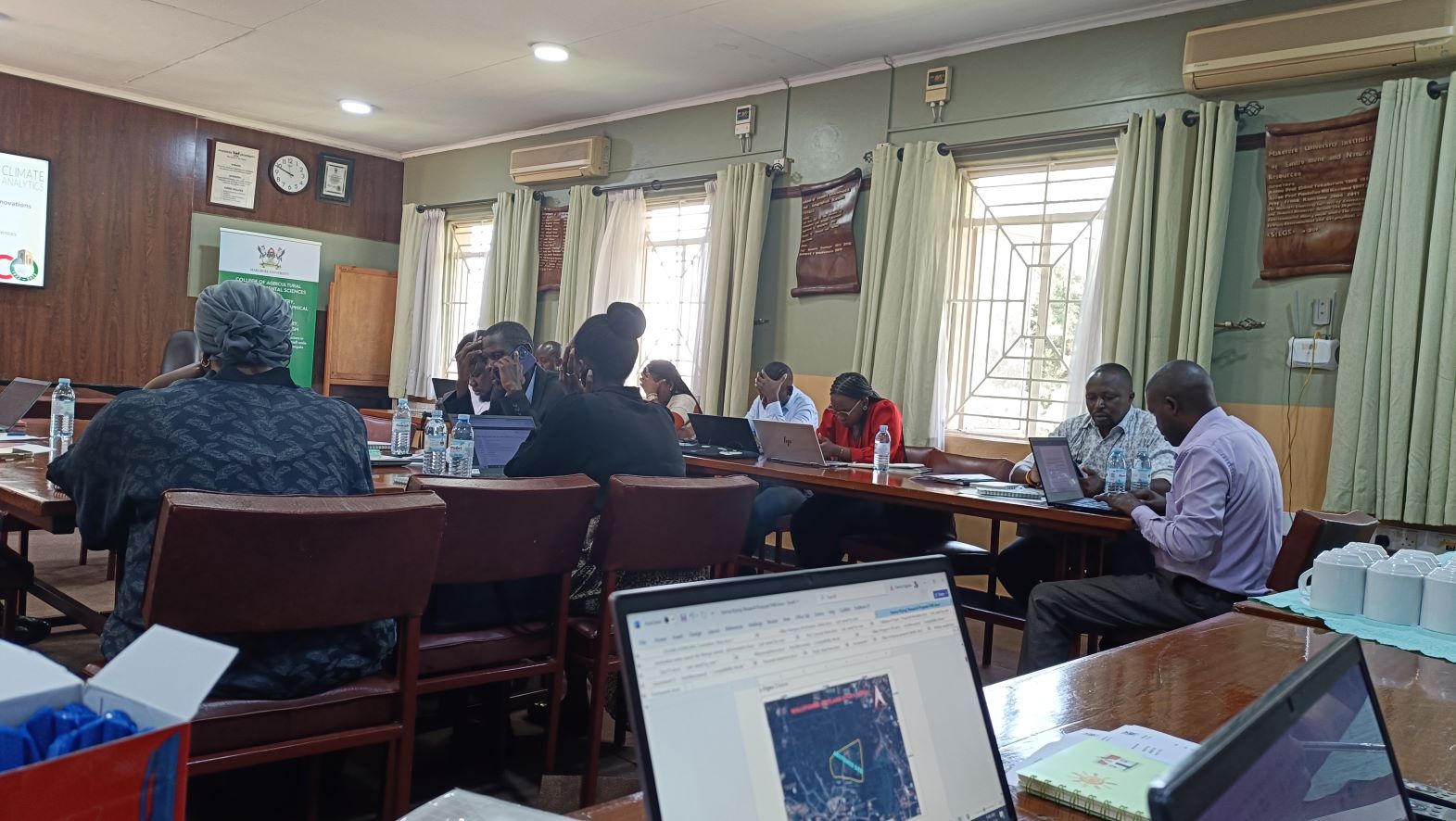
Uganda is at critical crossroads in its battle against the escalating effects of climate change, with extreme weather vents like floods, droughts, rainstorms and heat stress increasingly threatening its future. As the nation’s current climate finance gap stand at over $28.2 billion to facilitate, it is important to put in place innovative strategies to effectively mobilise and utilise funds for climate adaptation and mitigation. However, significant barriers impede local stakeholders access to the needed funding to undertake efforts aimed at building resilience to the changing climate, calling for actions to strengthen knowledge capacity and capabilities in climate finance for diverse climate change response actors. In response to this pressing need to close the gaps in access to climate change finance, the Makerere University Centre for Climate Change Research and Innovations (MUCCRI) is organized a two-day training from 25th-26th March 2026 on climate finance as part of the University Leadership for Catalysing Climate Adaptation Finance (UNI-LEAD) initiative. Facilitated by Prof. Revocatus Twinomuhangi, Prof. David Mfitumukiza, Dr. Alex Nimusiima and Dr. Catherine Mulinde from MUCCRI, the training equipped stakeholders from government, academia, media and civil society sectors with knowledge and tools necessary to tackle the financial barriers impeding climate resilience efforts.
Harnessing financial resources from both domestic and international sources to combat climate change is critical to mitigation efforts such as renewable energy initiatives and adaptation strategies like improving infrastructure to withstand extreme weather events. Uganda is signatory to international frameworks like the United Nations Framework Convention on Climate Change (UNFCCC) and the Paris Agreement which set stage for developed nations to assist developing countries (Uganda inclusive) by providing financial support to address climate change. However, despite the promises of developed countries to mobilise $100 billion annually for climate finance, Uganda and other developing countries face challenges in accessing these funds. The gap between financial commitments and actual disbursements has created scepticism and mistrust among recipient nations, who continue to struggle with unpredictable and often inadequate funding.
The imbalance in the distribution of climate global climate funds primarily inhibit Uganda’s access climate finance. While substantial climate financing has flowed toward mitigation projects within the energy, forestry, agriculture and waste sectors, Uganda’s most urgent need is for funding focused on adaptation. The country is grappling with extreme climate events, including severe flooding and droughts, which are damaging roads, bridges, and agricultural systems. There is a critical need for increased financial attention to adaptation efforts which are essential for safeguarding Uganda’s vulnerable infrastructure and communities. The predominance of loans over grants in climate change is also another challenge. Presently, 71% of climate finance is disbursed as loans, while only 26% is provided as grants. For countries like Uganda, where debt burdens are already high, the predominance of loans exacerbates the difficulty in managing financial obligations and slows down the process of implementing adaptation measures. Moreover, the complexity of approval processes and the involvement of intermediaries also slows down the disbursement of funds, leaving communities in need waiting for essential support.
Importantly, robust data and evidence is key in securing climate finance. International funders demand detailed, evidence-based proposals on how specific impacts of climate will be addressed. But many developing nations face significant challenges in gathering and analysing the necessary data to meet such requirements. Deliberate efforts for capacity building in data collection, analysis and sharing are needed to improve Uganda’s chances of accessing international climate funds. Without comprehensive and accurate data to illustrate a climate rationale/justification, the ability to present compelling proposals and effectively manage climate finance will remain constrained.
Loss and damage, which refers to the irreversible impacts of climate change that adaptation efforts cannot address is taking a centre stage in climate action. While international financing mechanisms have been established to deal with loss and damage, funds for this purpose have often been insufficient. For instance, although $700 million was pledged to a loss and damage fund, only a small fraction has been disbursed, leaving countries like Uganda in a precarious position. There is need for scaling up funding for loss and damage, ensuring that nations facing the worst climate impacts can recover and adapt to future challenges.
Recognising that relying solely on unpredictable international climate finance is unsustainable, Uganda is looking towards developing innovative domestical financing strategies. From a governance perspective, a Climate Finance Unit (CFU) within the Ministry of Finance, Planning and Economic Development (MoFPED) is already active and developing a Climate Finance Strategy (CFS) for the country. Among the promising initiatives is the National Climate Financing Vehicle (NCFV) which aims to pool resources from local stakeholders including banks, pension funds, development partners among other, to create a more stable and locally controlled climate finance framework. The private sector is also playing an increasingly important role in climate finance. Public-Private Partnerships (PPPs) are growing in importance, particularly in sectors that depend heavily on natural resources such as agriculture and energy. Through collaborations with businesses, Uganda hopes to scale up climate resilience projects and channel resources more effectively to vulnerable communities.
Uganda’s struggle to access sufficient climate finance is exacerbated by underfunded international pledges, shifting priorities, and complex political and technical barriers. Over 80% of global climate finance is directed toward mitigation projects, but Uganda’s most immediate needs lie in adaptation. The slow and unreliable pace at which international funds are disbursed has compelled many nations to increasingly become wary due to unmet commitments. Uganda’s Climate Change Act (2021) mandates climate-responsive budgets, yet the implementation of climate strategies remain hindered by limited local revenue and conditional grants. Innovative tools such as climate budget tagging to better track spending and ensure that funds are directed toward the most urgent needs. This offers opportunities for new mandates climate-proofing in public procurement in key sectors such as the transport infrastructure to include elevated roads to mitigate flood risks. Further, the private sector is exploring opportunities like green bonds and insurance products, although long payback periods and perceived risks remain deterrents to widespread investments. Carbon markets and debt-for-climate swaps in which debt relief is exchanged for adaptation projects or interventions are being explored as alternative solutions.
Despite the innovative solutions to boost climate finance in Uganda, significant political and technical hurdles persist. Corruption, political short-termism, and fragmented coordination between national and local governments complicate implementation. For example, a $47 million wetland restoration project saw funds diverted to compensate encroachers, undermining the project’s original goals. Local governments, which are responsible for 80% of adaptation efforts are underfunded and lack the necessary technical capacity to effectively manage climate projects. One civil society representative put it, “We need laws that outlive political cycles.”
Looking toward the future, there are promising pathways to help Uganda build climate resilience. A proposed national climate fund, modeled on Rwanda’s Green Fund (FONERWA) could provide a dedicated, transparent source of financing for climate adaptation projects. Regional partnerships such as transboundary water management collaborations with neighbouring countries like Kenya for Elgon region interventions, Nile Basin countries for initiatives targeting the Nile River, are also emerging as potential opportunities for collective climate action. Meanwhile, the adoption of technologies such as solar-powered irrigation and satellite-based forest monitoring could enhance Uganda’s ability to monitor and respond to climate threats. Uganda’s success in addressing climate change will depend not only on local innovations but also global commitments. Climate justice demands equitable financing and for Uganda to secure a sustainable future, the country must be able to mobilise and access the necessary resources to adapt to climate change, build resilience and protect its most vulnerable communities.
By
Hakimu Sseviiri, Researcher- Makerere University Centre for Climate Change Research and Innovations (MUCCRI); Email: hsseviiri@gmail.com